


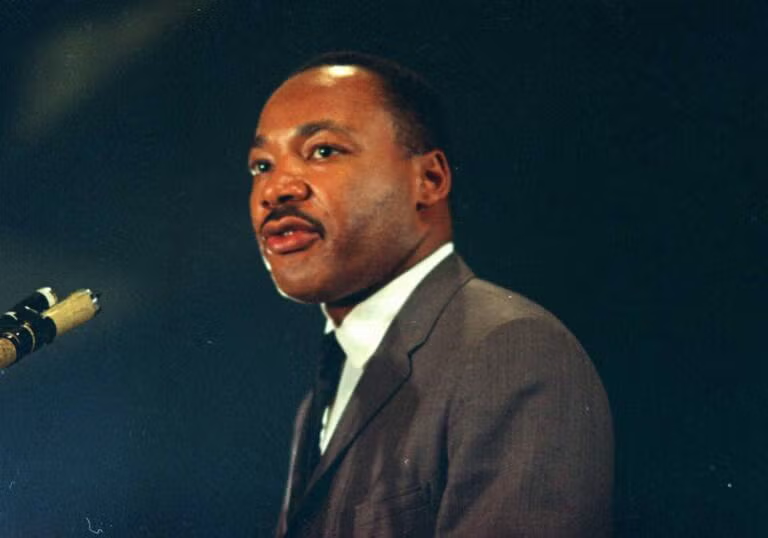
Dr. Martin Luther King Jr. Day falls on Monday, January 19, 2026. This federal holiday honors King’s leadership in the civil rights movement. It focuses on nonviolence, equality, and justice.
The holiday is observed on the third Monday in January. This follows the Uniform Monday Holiday Act. It creates a long weekend for many.
King was born on January 15, 1929. The date shifts annually but stays near his birthday. In 2026, it aligns closely with that date.
Now, let’s dive into how this holiday came about. It faced significant pushback before becoming law.
The Road to Recognition: Overcoming Opposition to Establish the Holiday
Rep. John Conyers introduced a bill on April 8, 1968. This was just days after King’s assassination. Coretta Scott King supported it strongly.
Early efforts failed in Congress. Lawmakers cited costs of about $18 million per year. They also debated honoring non-presidents.
Stevie Wonder boosted the cause in 1980. His song “Happy Birthday” raised awareness. A petition gathered 6 million signatures.
Congress passed the bill in 1983. Sen. Jesse Helms filibustered, claiming communist ties. President Reagan signed it reluctantly on November 2.
States adopted it unevenly. Arizona voters approved it in 1992 after NFL boycotts. South Carolina was last in 2000.
Some states combine it with Confederate holidays. Alabama calls it Robert E. Lee/MLK Day. This dilutes its focus.
To advocate for pure recognition, contact local officials. Share historical facts via petitions. This builds on King’s legacy directly.
Why It Matters Today: Dr. King’s Legacy Addressing Modern Challenges
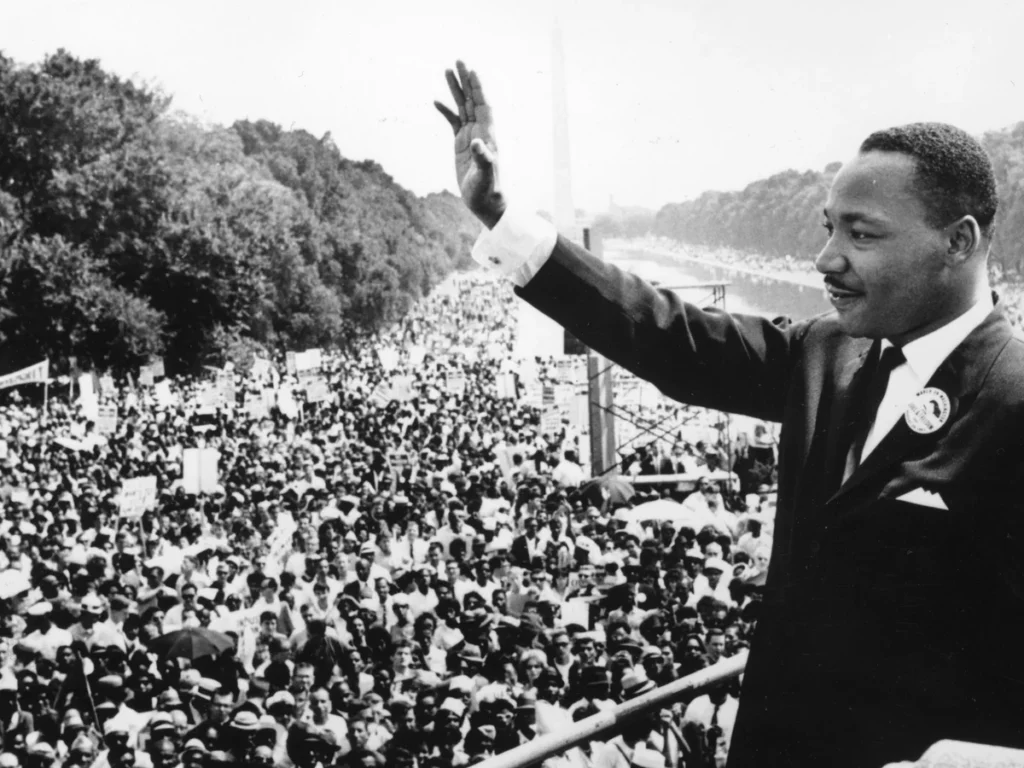
King led the 1963 March on Washington. His “I Have a Dream” speech inspired millions. It helped pass the 1964 Civil Rights Act.
He pushed for the 1965 Voting Rights Act. This expanded access for Black voters. Yet, in 2026, voter ID laws still suppress turnout.
Racial wealth gaps persist. In 2022, average Black household wealth was $352,000. White households averaged $1.5 million. This 38% increase in the gap since 2019 shows ongoing inequality.
King practiced nonviolence in the Montgomery Bus Boycott. It lasted 381 days and ended segregation on buses. Apply this to today’s anti-brutality protests.
The 1968 Poor People’s Campaign targeted economic justice. Today, 35.9 million Americans live in poverty based on 2024 data. King’s ideas fuel minimum wage debates.
These connections show his work isn’t done. They guide actions in 2026 and beyond.
How to Observe Dr. Martin Luther King Jr. Day in 2026: Practical Steps for Impact
Federal offices close on January 19. Banks and the NYSE shut down too. Retail stores often stay open.
Post offices halt service. No mail delivery occurs. Check local schools for closures.
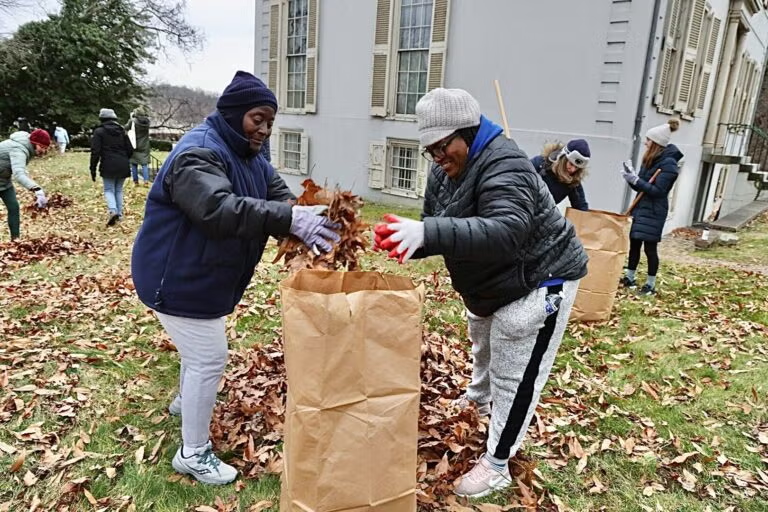
Turn the day into service. Use AmeriCorps to find projects. Sort food at banks or clean parks.
Virtual options exist. Mentor youth online. This overcomes travel barriers.
For families, read speech excerpts together. Create equality vision boards. Visit NPS virtual tours of MLK sites.
Join community events. Attend marches or services. Plan for cold weather in 2026.
These steps make observance active. They honor King through deeds.
2026-Specific Events and Global Commemorations
The King Center hosts events from January 8 to 19. Key is the Commemorative Service on January 19 at 10 a.m. EST. It’s at Ebenezer Baptist Church.
Live-stream on Fox 5 Atlanta. Other events include Beloved Community Awards on January 11.
Global Youth Summit focuses on nonviolence. It’s set for January 16 per plans.
Nationwide, Philadelphia’s Day of Service offers volunteering. Free entry to some sites may vary.
Internationally, Toronto holds memorials. Hiroshima ties it to peace events. Netherlands hosts dinners ending in song.
Participate online from anywhere. Use links from The King Center site.
These events build community. They extend King’s message worldwide.
Inspirational Quotes from Dr. King with Actionable Applications
“Darkness cannot drive out darkness; only light can do that.” Share positive stories online. Counter hate speech this way.
“Injustice anywhere is a threat to justice everywhere.” Address 2026 immigrant rights. Contact legislators with specific bills.
“The time is always right to do what is right.” Start with bias audits. Use Harvard’s Project Implicit tests.
These quotes aren’t just words. They prompt real steps.
Resources for Deeper Engagement and Ongoing Activism
Read “The Autobiography of Martin Luther King, Jr.” It covers his life in detail.
Watch “King in the Wilderness.” This documentary explores his later years.
Support The King Center. Donate or volunteer via their site.
Join NAACP efforts. They fight civil rights erosion.
The Southern Poverty Law Center tracks hate groups. Use their resources.
Download Smithsonian lesson plans. They include timelines from History.com.
These tools keep learning going. They turn knowledge into action.
For more on the holiday’s history, check the Martin Luther King Jr. Day Wikipedia page.
Conclusion: Turning Remembrance into Real Change
MLK Day is “a day on, not a day off.” The 1994 Service Act set this tone.
Commit to one justice effort after 2026. Track progress monthly.
FAQ: Is MLK Day a paid holiday? About 45% of employers offer it.
Honor King year-round. Sign up for civil rights newsletters.
This guide equips you for meaningful observance. It solves participation challenges head-on.

1 Comment
Pingback: Earthquake Now Thousand Oaks: What Happened Today