


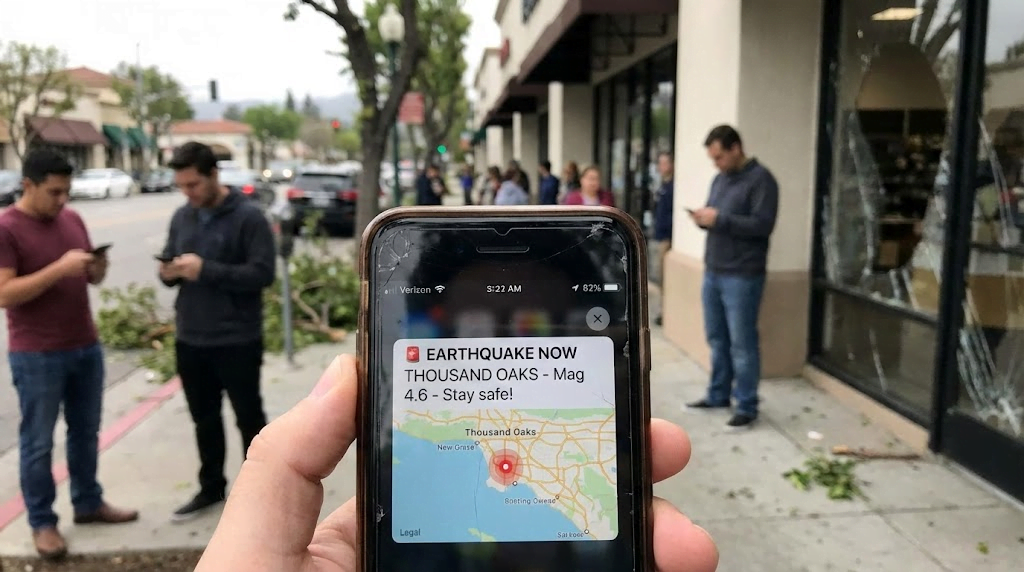
Did you just feel the ground move in the Conejo Valley? If you are searching for earthquake today just now or wondering about the shaking in Thousand Oaks, you are likely reacting to the seismic activity affecting Southern California this week.
To give you the immediate answer: Yes, there has been significant seismic activity in the region. Most notably, a Magnitude 4.9 earthquake struck near Indio, California, yesterday evening (January 19, 2026), and aftershocks have been rippling through the region since. While the epicenter was in Riverside County, the energy waves traveled through the sediment-filled basins of Los Angeles, causing noticeable swaying as far west as Thousand Oaks and Ventura County. If you felt a rolling motion rather than a sharp jolt, this distant epicenter is the reason.
For those checking earthquake in la right now, reports confirm that residents across the Los Angeles basin and into the San Fernando Valley felt the tremors. This serves as a critical reminder: we live in earthquake country, and knowing exactly what to do—and what is happening—is vital for your safety.
The Details: What Just Happened?
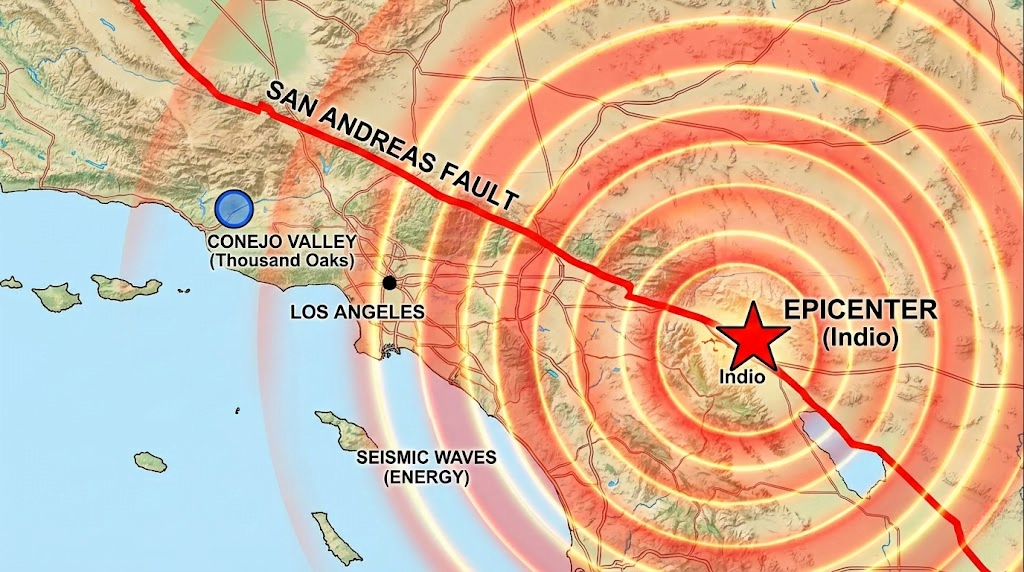
The primary event that has residents talking is the M4.9 quake centered approximately 12 miles northeast of Indio. It occurred at a depth of about 6 miles, which is shallow enough to produce strong surface waves.
- Magnitude: 4.9 (Initial estimates were 5.1)
- Epicenter: Indio Hills, CA
- Time: 5:56 PM PST (Jan 19, 2026)
- Aftershocks: Over 17 recorded ranging from M2.5 to M3.4.
Why did you feel it in Thousand Oaks? The Conejo Valley sits on a geological composition that can amplify seismic waves from distant quakes. When an earthquake now Victorville or Indio occurs, the energy travels efficiently through the bedrock and slows down when it hits our local sedimentary basins, increasing the duration of the shaking. This is why a quake 150 miles away can feel like a gentle boat ride in your living room in Thousand Oaks.
Global vs. Local: Understanding the Activity
It is easy to get overwhelmed by alerts. You might see trending searches for an earthquake now Philippines or earthquake Alaska now alongside local reports. It is important to distinguish between these events.
The “Ring of Fire” is active globally, and while a massive quake in the Philippines is tragic and geologically significant, it does not directly trigger faults in California. However, seeing these global headlines often spikes local anxiety. Rest assured, the shaking you felt in Thousand Oaks is strictly related to the Southern California fault system—specifically the San Andreas and San Jacinto fault zones—and not a direct result of activity across the Pacific.
Unlike a sudden earthquake Bay Area just now, which would involve the northern segment of the San Andreas or the Hayward Fault, our local shaking is distinct to the complex interactions of the Transverse Ranges in Southern California.
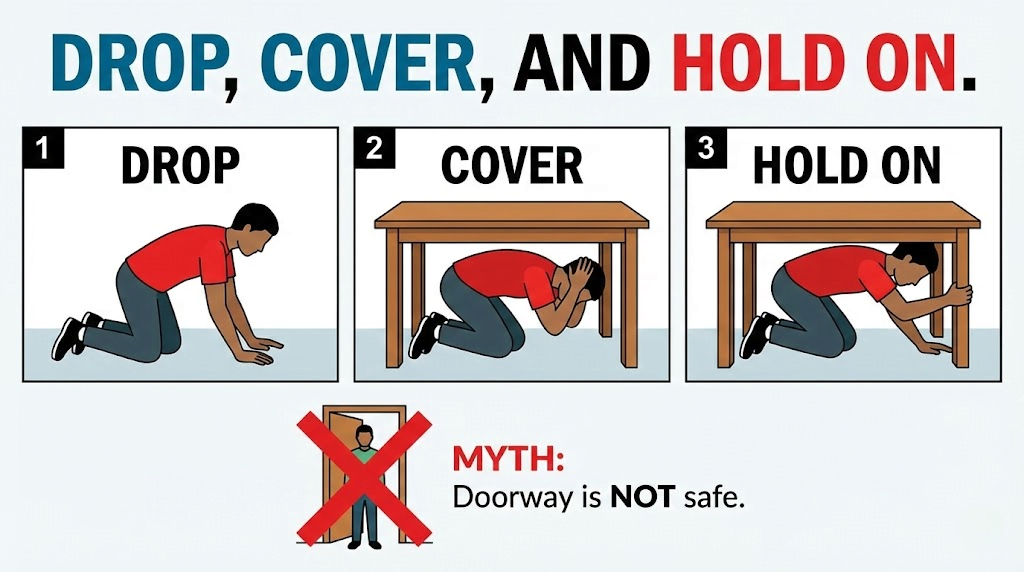
Safety Immediate Action Plan: Drop, Cover, and Hold On
If you feel shaking again—which is possible due to aftershocks—do not run outside. The statistics are clear: most earthquake injuries in the U.S. occur from falling debris (bricks, glass, furniture) while people try to exit a building.
The Golden Rule:
- DROP to your hands and knees. This prevents the quake from knocking you down.
- COVER your head and neck with your arms. If a sturdy table is nearby, crawl under it.
- HOLD ON to your shelter until the shaking stops.
Why Thousand Oaks is Unique: The Geology
Thousand Oaks and the greater Conejo Valley are nestled among the Santa Monica Mountains. This topography affects how we experience California earthquake now events.
While we are not directly on top of the San Andreas Fault (which is further northeast), we are near several potentially active local faults, including the Simi-Santa Rosa fault system. This proximity means we must be prepared for two types of shaking:
- Rolling Motion: From distant, large quakes (like the recent Indio event).
- Sharp Jolts: From local, smaller faults closer to Ventura County.
The soil composition in parts of Thousand Oaks can also lead to “basin effects,” trapping seismic energy and prolonging the sensation of shaking. This is why your neighbor on a bedrock hillside might feel a quick jolt, while you, down in the valley floor, feel a longer, rolling sensation.
Preparing for the “Big One”
The recent activity is a prompt to check your preparedness. It is not a matter of if, but when.
Your 3-Step Checklist for Today:
- Secure Your Space: Strapping down tall furniture (bookshelves, TVs) is the single most effective way to prevent injury and financial loss.
- Water Storage: Have 1 gallon of water per person per day for at least 3 days. In Thousand Oaks, our water comes from pipelines that cross major fault lines; disruption is a real possibility.
- Communication Plan: Text messages often go through when voice calls fail. Designate an out-of-state contact that everyone in the family can text to check in.
Resources for Real-Time Verification
When you feel shaking, accurate information is your best tool against panic. Avoid the hype on social media and check these trusted sources:
- USGS “Did You Feel It?”: The gold standard for data. You can contribute to science by reporting what you felt.
- VC Alert: Ventura County’s emergency notification system. Sign up to get text alerts specific to our area.
- MyShake App: A warning system that can sometimes give you seconds of notice before strong shaking arrives.
Conclusion
The shaking you felt in Thousand Oaks recently is a normal part of living in this dynamic geological region. While the earthquake in LA right now or the aftershocks from Indio can be unsettling, they serve as a valuable drill. By understanding the science behind why distant quakes rock the Conejo Valley and taking concrete steps to secure your home, you transform anxiety into action. Stay safe, stay prepared, and keep your emergency kit up to date.
Would you like me to help you create a customized family emergency communication plan for Thousand Oaks?

1 Comment
Pingback: The Brazilian digital banking landscape is crowded.