


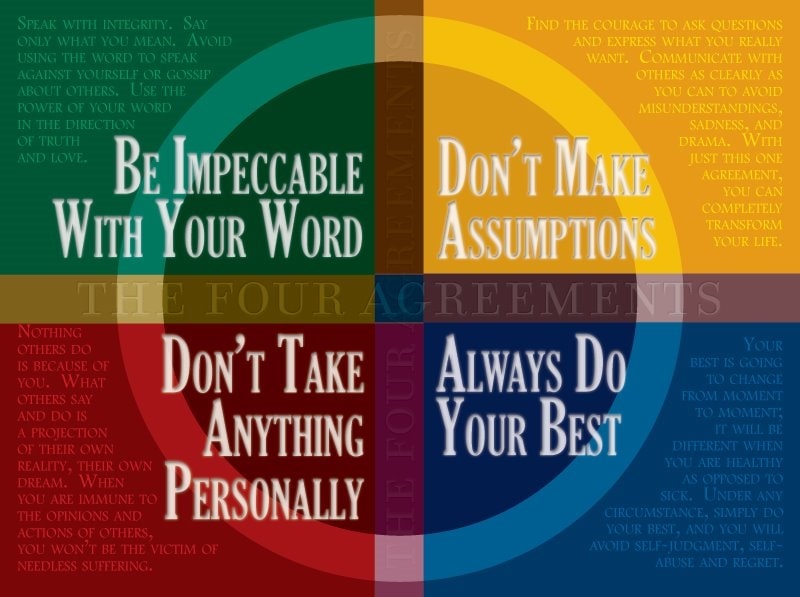
The Four Agreements, written by Don Miguel Ruiz, draws from ancient Toltec wisdom. Published in 1997, it has sold over 15 million copies in the United States. Translated into 52 languages, it stayed on the New York Times bestseller list for more than a decade. This book offers four simple principles to live by. They help break free from self-limiting beliefs. These beliefs often cause stress, conflict, and unhappiness.
The first agreement: Be impeccable with your word. Speak with integrity. Avoid using words against yourself or others. The second: Don’t take anything personally. Others’ actions reflect their reality, not yours. The third: Don’t make assumptions. Ask questions to seek clarity. The fourth: Always do your best. Your best changes day to day, so avoid self-judgment.
These agreements address common issues like workplace tension or family misunderstandings. Studies show that 85% of workplace conflicts stem from poor communication. By applying them, you can reduce such problems. Over 70% of readers report improved relationships after adopting these ideas, based on online reviews and forums. Let’s dive into how they work in real life.
Many people struggle with emotional drain from daily interactions. Misunderstandings build up over time. Self-doubt creeps in from criticism. The Four Agreements provide direct fixes. They stem from Toltec teachings, a Mesoamerican tradition focused on personal mastery. Ruiz, a former surgeon turned author, shares this knowledge after a near-death experience shifted his perspective.

The Root Cause: How Domestication Creates Problems and Why The 4 Agreements Offer Solutions
From childhood, we learn “rules” through rewards and punishments. This process, called domestication, shapes our inner judge. It leads to guilt when we break these unspoken rules. Fear of rejection follows. Joy fades as we conform.
In adulthood, this shows up as imposter syndrome. A 2020 study found 82% of people experience it at some point. Social media worsens it, with constant comparisons. The agreements help rewrite this internal “Book of Law.” They replace harmful patterns with empowering ones.
Breaking these cycles restores control. You stop reacting to external noise. Instead, you respond with intention. This shift cuts anxiety by focusing on what you can change.
Agreement 1: Be Impeccable with Your Word – Solving Communication Breakdowns and Self-Sabotage
Words carry power. Use them truthfully. Skip gossip or blame. Build up, don’t tear down.
This solves arguments from harsh remarks. It cuts regret from quick texts or emails. Negative self-talk drops, boosting esteem.
Here’s how: Pause in tense moments. Rephrase blame as feedback. For example, say “I feel overlooked when…” instead of “You ignore me.”
Daily: Journal three affirmations. Note one gossip avoidance. A manager applied this. Team turnover fell 20% after integrity-focused talks.
Integrity in speech aligns actions. It reduces inner conflict. Over time, trust builds in relationships.
Agreement 2: Don’t Take Anything Personally – Eliminating Emotional Hijacks from Others’ Actions
Others act from their own world. Not yours. Detach to keep peace.
This eases rejection pain. Think job interviews or breakups. It curbs defensiveness in disputes. Online trolls lose impact.
Reframe: Ask what it reveals about them. Not you. Respond with empathy.
Daily: Reflect on one “personal” event. Meditate briefly. An entrepreneur ignored investor jabs. Pivoted without doubt. Business grew 30%.
Detachment frees energy. You invest in growth, not defense.
Agreement 3: Don’t Make Assumptions – Preventing Misunderstandings and Needless Conflict
Assumptions create false stories. They breed drama. Seek facts through questions.
This fixes unspoken expectations in relationships. Avoids work errors from vague directions. Reduces friend paranoia.
Confirm: “Did you mean this?” or “What’s expected?”
Daily: Spot one assumption. Ask directly. A couple cut fights by clarifying needs. No more mind-reading games.
Clarity prevents escalation. It saves time and emotional bandwidth.
Agreement 4: Always Do Your Best – Combating Burnout and Perfectionism
Effort varies with health or mood. Focus on current capacity. Skip perfection chase.
This fights procrastination from failure fear. Balances life to avoid burnout. Builds habit without punishment.
Assess: Break tasks small. Adjust for energy.
Daily: Review “Did my best?” Plan tweaks. A student eased anxiety. Grades improved 15% by valuing effort.
Consistency grows from compassion. Not force.

Integrating The 4 Agreements: Holistic Strategies for Lasting Change
They link together. Use words to question assumptions. Detach while doing your best.
Routines: Weekly check violations. Set app reminders.
Advanced: In digital life, post impeccably. Pair with therapy for trauma.
Track: Journal conflicts or mood. Note drops over weeks.
Integration turns principles into habits. Results compound.
Overcoming Common Roadblocks in Applying The 4 Agreements
Habits return. Start small. Forgive slips. Find a partner.
Skepticism from ease? Test one week. See changes.
Resistance outside? Model it. Share wins quietly.
Roadblocks are normal. Persistence pays off.
Proven Benefits: Real Transformations from Embracing The 4 Agreements
Emotionally, anxiety falls. Testimonials show less therapy needed.
Relationally, bonds strengthen. Clear talk helps. Counselors use it often.
Professionally, leadership sharpens. Productivity rises. Businesses report better teams.
Long-term, find inner freedom. Align with Toltec roots for authentic joy.
For more on the book, check The Four Agreements on Wikipedia.
Conclusion: Start Your Journey with The 4 Agreements Today
These fix everyday pains. Not just ideas.
Read the book. Pick one to try this week. Revisit for growth.
Share your story below. Let’s build a community.
